
I've seen many buyers struggle with choosing between melamine plywood and MDF. The wrong choice can lead to wasted materials, unhappy customers, and lost profits.
For most applications, melamine plywood offers better moisture resistance and durability, while MDF provides a smoother surface and lower cost. Plywood is ideal for humid environments and structural uses, while MDF works well for interior furniture in dry conditions.
Let's break down the key differences between these materials to help you make the right choice for your specific needs. After 15 years in the panel industry, I've learned that the best material often depends on your unique situation.
Key Takeaways: MDF vs Plywood at a Glance
The constant questions I get from buyers about these materials made me realize we need a clear comparison. Many make costly mistakes by choosing the wrong option.
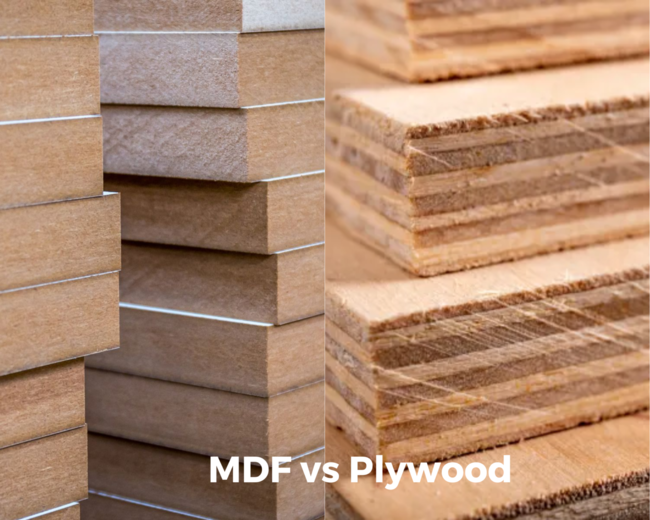
Plywood consists of multiple wood layers bonded together, offering better water resistance and strength. MDF is made from compressed wood fibers, providing smoother surfaces but less moisture resistance. Plywood costs 20-30% more but lasts longer.
Core Differences
| Feature | Melamine Plywood | MDF |
|---|---|---|
| Structure | Multiple wood layers | Compressed wood fibers |
| Moisture Resistance | High | Low |
| Surface Smoothness | Good | Excellent |
| Weight | Lighter | Heavier |
| Screw Holding | Excellent | Fair |
| Cost | Higher | Lower |
What Is Melamine Plywood?
After countless factory visits, I've seen firsthand how melamine plywood is made. Many buyers don't understand its unique structure, leading to application mistakes.
Melamine plywood combines traditional plywood core layers with melamine-coated paper surfaces. This creates a water-resistant, durable panel that maintains the strength of plywood while adding a decorative, easy-to-clean surface.
Manufacturing Process
-
Core Layer Selection
- Hardwood or softwood veneers
- Multiple thin layers
- Alternating grain direction
-
Surface Treatment
- Melamine paper application
- Hot press bonding
- Surface finishing
-
Quality Control
- Moisture content testing
- Bond strength verification
- Surface inspection
The manufacturing complexity contributes to both the higher cost and superior performance of melamine plywood. Each layer serves a specific purpose, from the cross-laminated core providing stability to the melamine surface offering protection and aesthetics.
What Is MDF Board?
When I first visited an MDF factory, I was amazed by how wood fibers transform into smooth, uniform panels. This manufacturing process explains both MDF's strengths and limitations.
MDF (Medium Density Fiberboard) is engineered wood made by breaking down hardwood or softwood residuals into wood fibers, combining them with wax and resin, and forming panels under high temperature and pressure.
Manufacturing Stages
-
Fiber Preparation
- Wood chip processing
- Steam treatment
- Fiber separation
-
Board Formation
- Resin mixing
- Mat forming
- Hot pressing
-
Surface Treatment
- Sanding
- Melamine coating (if required)
- Quality inspection
The homogeneous structure of MDF makes it ideal for machining and finishing, but also explains its vulnerability to moisture. Understanding this helps explain why MDF excels in some applications but fails in others.
[Continued in next part due to length...]